 esuregreen@gmail.com
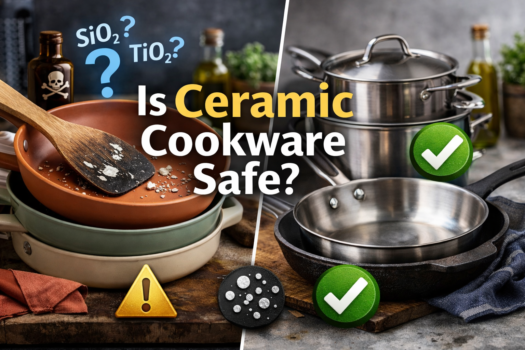
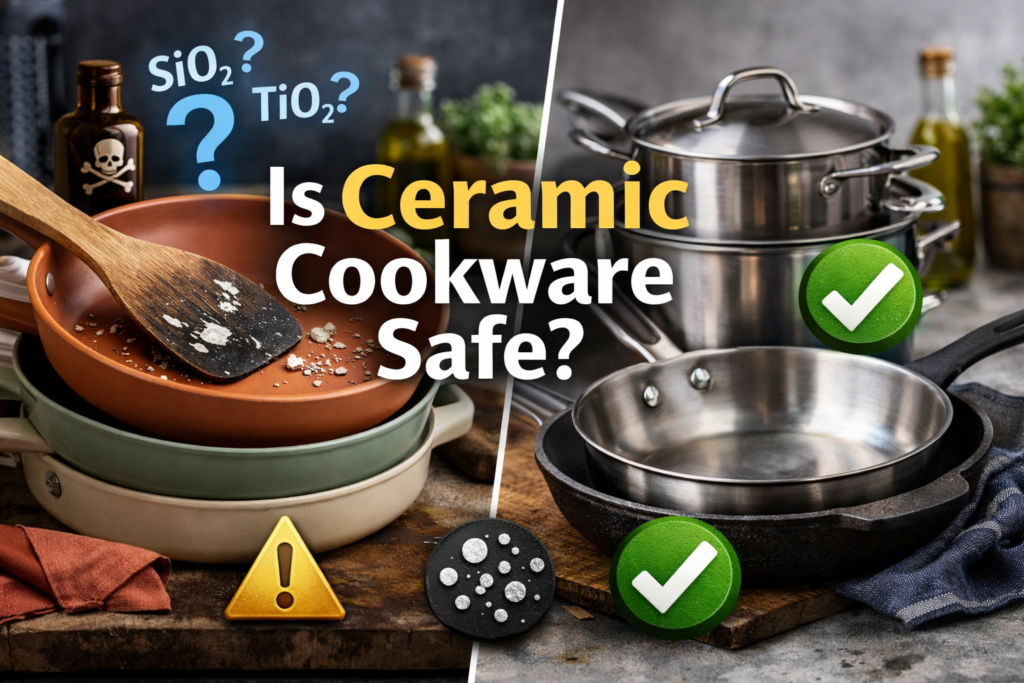
Ceramic cookware is everywhere—saturating social feeds and store shelves. Instagram ads and influencer kitchens showcase colorful ceramic pans that promise easy, non-stick cooking without the chemicals found in traditional non-stick cookware. Yet many consumers still ask: Are ceramic pans safe?
The answer is more nuanced than marketing suggests. While ceramic cookware is promoted as safer than Teflon, it brings concerns about durability, unknown coatings, and long-term safety. If you’re comparing cookware, it’s worth a deeper look before deciding if a ceramic pan belongs in your kitchen.
What Ceramic Cookware Really Is?
First, it’s important to understand that most modern ceramic cookware isn’t actually made from pure ceramic.
In reality, most so-called “ceramic” pans are metal coated with a ceramic-based non-stick layer. The coating is usually formed via sol-gel, using silica (from sand), metal oxides, and binders to create a thin, glass-like surface on aluminum or steel cookware.
The term ceramic cookware is misleading. Many experts more accurately call it “ceramic-coated cookware.”
While slick, the coating raises questions about its contents.
The Biggest Problem: Unknown Coating Formulas
One of the most overlooked concerns with ceramic cookware is transparency.
Manufacturers frequently advertise their pans as:
- PFAS-free
- PFOA-free
- Non-toxic
- Eco-friendly
However, these claims don’t necessarily tell the full story.
Most ceramic coatings are proprietary, so companies do not disclose complete ingredient lists for coating layers or adhesion primers. The American Ceramic Society notes that these sol-gel coatings may contain silica, metal oxides, and binders, with exact compositions often kept secret.
With ceramic pans, you may not know what materials make up the coating or bonding layers.
This lack of transparency is one reason many cautious consumers prefer uncoated cookware materials, such as stainless steel.
Ceramic Coatings Wear Out Quickly
Another key issue is durability.
Unlike traditional non-stick coatings, ceramic coatings tend to be brittle and wear down over time. High heat, metal utensils, or abrasive cleaning can accelerate coating degradation.
Once that coating begins to break down, several things can happen:
- The pan loses its non-stick ability.
- The coating may flake or crack.
- The metal base underneath becomes exposed.
Many ceramic pans lose their non-stick properties within 1–2 years and require more frequent replacement than other cookware.
This short lifespan is a high cost and environmental drawback.
Potential Particle and Nanoparticle Concerns
Another reason some experts remain cautious about ceramic cookware is the possibility of microscopic particles entering food when the coating degrades.
Ceramic coatings are often made from silicon dioxide and metal oxides such as titanium dioxide, which form a thin glass-like layer.
When coatings crack or chip, tiny particles may enter food. While generally considered low risk, long-term effects are not well studied.
This uncertainty leaves a key gap in safety research.
Is Ceramic Cookware Safer Than Teflon?
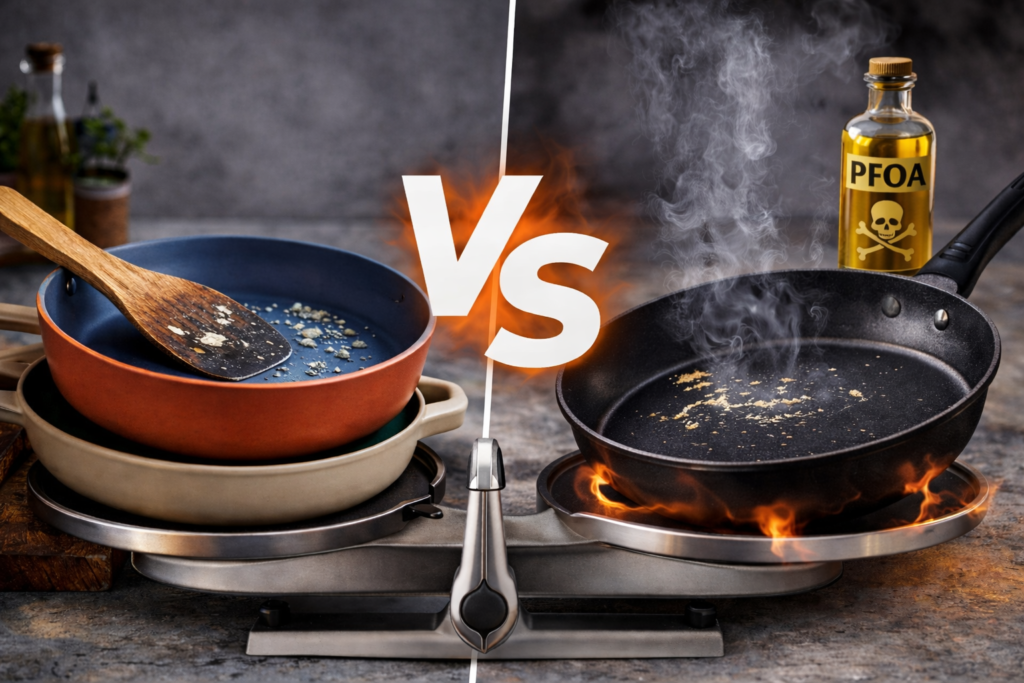
One reason ceramic cookware became popular is the public backlash against traditional non-stick coatings like Teflon.
Older Teflon pans used PFOA, a chemical linked to environmental and health risks. Modern ceramic cookware avoids these chemicals and doesn’t release similar fumes when overheated.
So is ceramic cookware safer than Teflon?
In some ways, yes. Ceramic coatings typically avoid PFAS chemicals that once made Teflon controversial.
However, this does not automatically make ceramic cookware the safest overall. While it avoids PFAS chemicals, it may present other risks related to proprietary formulas and durability. In comparison, alternatives like stainless steel offer different trade-offs.
Is Ceramic Cookware Safer Than Stainless Steel?
Stainless steel is often considered one of the safest and most reliable cookware options.
Healthline says there’s “little reason to believe that cooking with stainless steel is harmful.”
Unlike ceramic-coated pans, stainless steel cookware has several advantages:
- No chemical coatings
- No proprietary layers
- Extremely durable
- Long lifespan
Food may stick to stainless steel, but many chefs prefer it because it avoids problems with degraded coatings.
When asked, “Is ceramic cookware safer than stainless steel?”, many experts say no, emphasizing that stainless steel is simpler, more durable, and more chemically stable than ceramic cookware.
The Real Trade-Off: Convenience vs Longevity
The appeal of ceramic cookware is clear. A ceramic pan offers easy food release, quick cleaning, and an attractive design.
But these benefits have trade-offs.
Ceramic cookware:
- relies on a thin coating that eventually fails
- uses proprietary formulas that aren’t fully disclosed
- may release particles as coatings wear down
- Typically, it lasts only a few years.
By contrast, stainless steel or cast iron can last decades, while other materials may wear out much sooner.
Final Verdict: Are Ceramic Pans Safe?
So, are ceramic pans safe?
For everyday cooking, most experts say ceramic cookware is generally safe when used properly. Still, safety isn’t the same as long-term suitability.
The bigger concerns are transparency and durability. With proprietary coatings prone to wear, consumers may not know what they’re cooking on as coatings degrade.
If your goal is the safest and most durable cookware possible, many experts recommend skipping coated pans entirely and choosing high-quality stainless steel cookware instead.
In the end, the safest kitchen is often the simplest—crafted from time-honored materials and built on the confidence of generations, rather than fleeting cookware trends.